
"Fight—Don't Starve!" — When a Union of the Unemployed Took on Portland City Manager James E. Barlow

PHOTO: Unemployed Council (Credit: Library of Congress)
When the Great Depression hit, thousands of Mainers were thrown out of work as unemployment reached between 15 and 20 percent. In some ways, the state was somewhat cushioned by the financial crisis due to the number of subsistence farmers who made ends meet by chopping wood, canning and growing their own food. But manufacturing, construction and tourism were hit very hard. In Portland, municipal public assistance costs spiked by 500 percent in 1933 as jobless workers went to the city to feed their families and pay rent.
On May 12, 1933 President Franklin D. Roosevelt signed legislation creatingthe Federal Emergency Relief Administration (FERA), which provided funding for direct aid (the "dole") and public works jobs to help millions of families to stay afloat. The jobs program was more expensive than direct cash payments (the “dole”), but public works programs were considered more beneficial for workers because they were believed to instill dignity and self-worth. In the hard winter of 1933-34, FDR established the Civil Works Administration (CWA), which employed around 4 million people, including 2,000 unemployed workers in the Portland area, constructing buildings and bridges until it ended on March 31, 1934.
Many local leaders in Maine were deeply critical of such an expansion of government, preferring austere spending cuts to social welfare programs. Portland City Manager James E. Barlow was not a fan of FDR and resisted efforts to strengthen public assistance for the city’s unemployed. But as evictions soared and funding was set to run out for relief projects, radicalized unemployed workers in the city began to get organized.
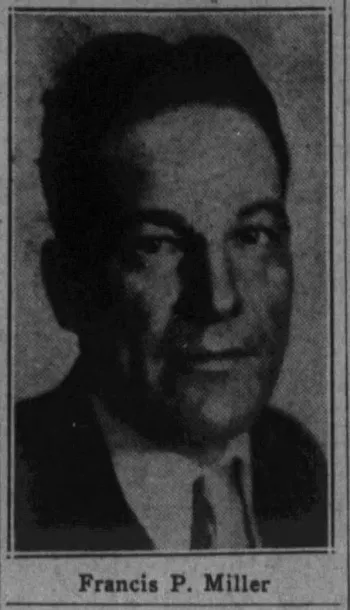
In January, 1934, a group of radical left-wing workers working on CWA projects in the Portland area formed the Portland Relief Workers Protective Association (PRWPA) to fight for fair wages and call on Congress to continue funding the public works projects. The group was open to both relief workers and unemployed workers. At a meeting attended by 300 workers, the new organization elected Edward R. Lee as President, George R. McKinley as secretary treasurer and Francis P. Miller as delegate at large. As Lee told the press, the goal of the organization was to promote “the cause of the working man.”
All three officers were union men who had been thrown out of work by the Great Depression. Miller was a plumber and member of the Plumbers and Steamfitters Union Local 217, McKinley worked on the railroad and Lee was a union painter. Miller was also a Navy vet and Miller, originally from Bangor, served in the 103rd Infantry during World War 1.
As one of its first acts, the PRWPA passed resolutions asking for better sanitation facilities on CWA jobs, an end to favoritism and a guaranteed $18 per week with additional benefits for workers with more than three children. The new organization also called on Maine’s Congressional delegation to support ongoing funding to continue the CWA past March.
The PRWPA was affiliated with the Unemployed Council of America, a grassroots mass organization launched by the Communist USA in 1930 to mobilize jobless workers, demand government relief and resist evictions. These Unemployed Councils were inspired by the St. Petersburg Councils of the Unemployed, which were soviets of unemployed workers who organized against the Tsar Nikolai II during the Russian Revolution of 1905. The local Unemployed Councils in the U.S. were democratic and acted independently of the national organization, but all of the councils advocated for more relief and public works projects for unemployed workers. The Trade Union Unity League, an industrial union umbrella organization under CPUSA, sought to build all of the Unemployed Councils into one network to maximize their power.
CPUSA sent paid organizers to organize unemployed councils across the country by recruiting in bread lines, soup kitchens and outside unemployment offices, flophouses and job sites. With the assistance of Herbert Benjamin, a national organizer with the Unemployed Council of America, Portland workers recruited 1700 members to join PRWPA. Leading with the slogan "Fight—Don't Starve!", unemployed councils led “hunger marches” in major cities like Boston, Philadelphia and New York. Anti-Communist public officials sent out hundreds of police to break up the marches and clashes frequently broke out between unemployed workers and cops. A Maine Congregational minister Robert A. Bakeman from Auburn was among several men arrested after 200 police broke up an Unemployed Council meeting on the Boston Common in 1932.
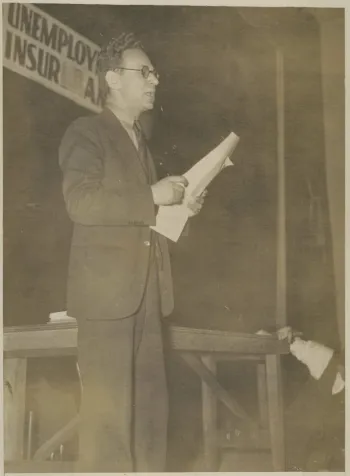
After funding for the CWA projects ended in March, the PRWPA established a committee to continue to engage workers after their relief jobs ceased. The group’s open-air meetings in Portland's Lincoln Park attracted hundreds of people. The group also put on dances and lectures at the organization’s Workers’ Center at 82 Union Street. PRWPA invited Irish labor leader Sean Murray, an Irish Nationalist and General Secretary of the Communist Party of Ireland, to speak about the life of Irish revolutionary labor leader James Connolly and the struggle for Irish liberation. Speakers from out-of-town also spoke at PRWPA events about problems impacting fishermen and longshoremen. PRWPA crusaded against city relief administrator Alice Waldo for refusing assistance to families facing evictions. Members also went to other cities like Lewiston to set up more Unemployed Councils.
That February, PRWPA President Edward R. Lee was among 1,000 delegates who attended the Convention of the Unemployed in Washington D.C., where delegates pledged to mobilize the masses of jobless workers to fight to pass a radical social insurance bill. At the time there were no federal programs like Social Security or unemployment insurance, so Unemployed Councils drafted a bill that would provide comprehensive federal compensation for the unemployed, destitute farmers, the elderly, disabled and part-time workers. The proposal, sponsored by Minnesota Farmer-Labor Party Congressman Ernest Lundeen, guaranteed $10-$15 a week for elderly Americans and workers laid off through no fault of their own. It also compensated mothers on maternity leave and workers who suffered injuries or illness. Unlike Social Security, the bill proposed to fund the program by raising taxes on the rich and corporations. It would be administered by commissions directly elected by workers and farmers.
PRWPA members canvassed all over Portland, collecting 2,500 signatures in support of the Lundeen Bill. In March of 1934, 500 members packed a City Council meeting to present their petition and encourage the council to endorse the Lundeen Bill. But the conservative council had no interested in endorsing such a radical measure. Lee denounced the councilors as “enemies of the working class of Portland and the tools of big business and the Chamber of Commerce,” drawing exuberant, prolonged applause. Council Chairman Philip J. Deering immediately slammed his gavel repeatedly and abruptly adjourned the meeting. The lights were immediately cut and police quickly escorted Deering out a side door. Lee insisted his members were law abiding and argued that the police presence “was only a trick of the bosses to discredit us and cause public sentiment to be arrayed against us.”
“The city officials are trying to break the spirit of the workers by their discrimination and abuse of union members,” he said
PRWPA members continued to collect signatures and sent the petition to Maine’s congressional delegation, though they received a similarly cold response. The workers also attempted to convince the Portland Central Union, a regional council of American Federation of Labor unions, to back the measure. However, leadership of the conservative AFL was dead against the Lundeen Bill because they believed it was dangerously radical, would undercut existing union-managed benefit programs and make it harder to recruit and retain dues-paying members. Nevertheless, thousands of rank-and-file AFL union members backed the Lundeen bill because the economic conditions had become so desperate for workers during the Great Depression. The AFL was also vehemently anti-communist and Portland Central Union leaders blasted the PRWPA for not carrying the American flag at their marches and rallies.
Lee fired back that the unemployed workers were too poor to afford a decent flag and criticized the Central Labor Union for not representing the interests of the common worker and charging exorbitant dues to provide high salaries for the “chosen few.” Shortly after, Lee announced a run for State Senate on the Workers’ Party ticket, a short-lived revolutionary socialist party. That June, the party made headlines for leading the massive 1934 Toledo Auto-Lite Strike, which led to widespread union organizing in Toledo and the formation of one of the first United Autoworkers (UAW) locals in 1935. PRWPA member Frank P. Miller briefly ran for the Maine House as a Workers’ Party candidate, but dropped out because he became “dissatisfied with activities of a Communistic element” in the party. Lee resigned as PRWPA President in July and the members elected Machinists Union member James E. Bickford to succeed him.
Barlow's "cold-blooded" welfare policy
In August, City Manager James E. Barlow sparked a firestorm in the city when he announced that he would run the welfare department on “a cold-blooded business basis” and developed a strict “no-work-no relief” policy to keep relief costs down. He cut allotments of milk and ordered his department to refuse aid to any “able bodied persons who refused to work for $2 a day in exchange for relief.” The policy drew protests from impoverished Portlanders, but Barlow shrugged them off stating that they “were perfectly content to sit back and do nothing while the City paid their bills.” As a result of this draconian policy, relief expenditures dropped by a third. Barlow even made a list of relief recipients from other towns and attempted to submit bills to those municipalities for reimbursements of welfare money.
The PRWPA assailed Barlow for making “fascist statements” and denounced his plan to force destitute people to work for relief money. PRWPA member David Einbinder, a Jewish socialist merchant seaman originally from Poland, would later describe what he called “chain gang conditions” for relief workers at a local quarry. He told the press that the relief project served no other purpose but “punishment for being poor.” Einbinder said children “from 14 to 16 years” of age were forced to work at the quarry and “grumblers” were sent away by themselves so they couldn’t air their complaints to their fellow workers. Nobody cares whether any work is done, he said, and the timekeepers merely punched the time cards to make sure the workers reported to the job. He blasted the local press for ignoring the plight of relief workers.
“These are things the public never hears of,” said Einbender. “Instead of keeping the public informed as to the things which are to their own interest, the press keeps the people doped with funny pages, news of weddings and deaths and lots of funny stories.”
After PRWPA failed to get Barlow to change his heart, they called a mass meeting on August 7 in Lincoln Park to present a list of demands to the City Council. Barlow retorted that the city was “broke” and warned the unemployed workers that the aid they received would seem “lavish” after he was made more cuts later that year. PRWPA leader Charles H. Burnham warned Barlow that the men on relief “are at the end of their patience” and will not submit to further subjection from municipal officials. He pointed out that, relief workers in other communities who were goaded to a “starvation point for their wives and children” have forced municipal authorities to extend adequate relief. In a prepared statement, Barlow responded that the group needed to bring their concerns before the taxpayers.
“The funds of the City of Portland, money obtained through taxation, is practically exhausted," Barlow said. "If you believe that you deserve and are entitled to more relief, go before taxpaying citizens, not poll tax payers, but property owners and have them advise me and the City Council that they are desirous of having their taxes increased to give you more aid.”
While Portland received federal funding for relief programs, the City Manager complained that the state hadn’t done anything to aid the poor, unlike other states. While the local newspapers did little reporting on the impact of Barlow's policies, they ran headlines about a random Ohio man who wrote a letter to Barlow praising the “cold-blooded” policy. Then on August 7, Burnham led a delegation of 300 PRWPA members to City Hall to demand increased relief and a wage scale of 50 cents an hour.
Barlow grew furious at the demonstrators and attacked the “chiselers and shirkers on the city relief rolls.” He argued that the best solution to reduce spending in the program was to make relief work and the dole unattractive by cutting pay, increasing work hours, and making public the names of people receiving public assistance. He claimed some relief recipients were hiding money and that some preferred working three days a week for $4 rather than taking private sector jobs that required more work for less pay. He predicted that his winter relief program would provide only the “barest necessities to sustain life.”
“Too many workers have developed the idea that the Government owes them a living,” said the City Manager,
Two days later, PRWPA gathered at the Workers’ Center and voted unanimously to appeal to labor unions to oppose the “submission to the system of forced labor that the City of Portland is trying to introduce.” They got little sympathy from union leaders. They also voted to urge the city to pay relief labor in cash instead of store orders and to recommend that Barlow send trucks into the country to purchase milk below the regular cost to distribute to the poor. In addition, they voted to reject two wage scales being paid on identical jobs in relief work. PRWPA members reported that workers were being laid off steady municipal work and replaced by men at $2 a day on “conscript labor.”
All of the daily papers were hostile to the PRWPA, but the Portland Evening Express was especially vitriolic in its denunciations of the group. In an Aug. 9 editorial, it referred to PRWPA as “(non) labor union” trying to get free aid without working. But in the subsequent weeks, PRWPA disappeared from the headlines. Apparently, there was an internal coup in the organization because on August 22, newspapers reported that the members voted to disband and reorganize the PRWPA as a “social and recreational” club. It also announced that “all known radicals and sympathizers will be asked to resign.”
The newly reorganized club said it would “continue its interest in the welfare of relief recipients, but would not participate in demonstrations of any nature.” And with that, the PRWPA disappeared. It remains a mystery why it so abruptly and unceremoniously disbanded, but apparently enough members disapproved of it radical leadership and tactics that they effectively dissolved the organization. From my research, it doesn’t appear that any other Unemployed Council formed in Maine after that.
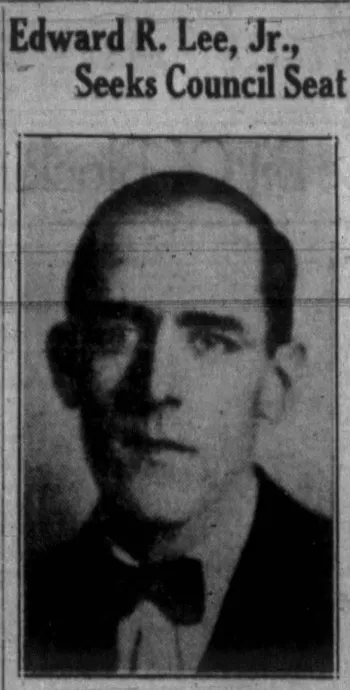
Former PRWPA President Edward Robert Lee Jr., who had previously aborted his run for the State Senate on the Workers’ Party ticket, continued to work on relief projects and took out nomination papers to run for Portland City Council later that fall. But he never made it on the ballot.
“I am primarily interested in representing the working groups of Portland in the City Council,” Lee said. “I know the problems and will work for their interests. I neither solicit or desire the support of those not interested in the problems of the poor and the working class.”
In 1936, union plumber and former PRWPA organizer Frank P. Miller, who briefly ran for the Maine House, announced a run for U.S. Senate, but never made it on the ballot. He ran as a “Independent Republican” in a race against anti-New Deal Republican incumbent Wallace White and former Democratic Governor Lewis Brann.
“At present, the workers of Maine have no opportunity of casting a vote for a candidate who will work for their interests if elected,” Miller told the press. I understand the problems of the workingman and believe that I can get action if I am elected to go to Washington.”
White narrowly won reelection by about 4,600 votes. The intense organizing and advocacy of the CPUSA’s Unemployed Councils paid off when they successfully pressured Congress to take up the Lundeen Workers’ Unemployment Insurance Bill in the spring 1935, making it the first unemployment insurance plan in U.S. history to be recommended by a congressional committee. The Lundeen Bill was defeated in the House by a vote of 204-52, but the popular pressure for the bill likely played a role in passage of the more conservative Social Security Act in August of that year. The SSA also created our clunky unemployment insurance system, which as we learned during the pandemic, is woefully outdated because self-employed people and independent contractors aren't covered. Currently only about 26-28 percent of actually unemployed people receive active benefits due to strict state-level rules on work history, earnings, and separation reasons.
In retrospect, a progressive universal social insurance program that would cover anyone who can't earn an income due to due to a lay-off, sickness, injury, birth of a child or simply growing old and funded by taxes on the wealthy would be a much more efficient and effective than the patch work of programs existing today. The concept of an economic security and public retirement fund was first proposed in the U.S. by Thomas Paine in his 1795 pamphlet Agrarian Justice. It only took 140 years of workers organizing and agitating for some form version of Paine's vision to become reality. And it has been under threat by anti-labor politicians and their wealthy benefactors ever since.